
Mould is a type of fungus that naturally exists in the environment, but it becomes a problem when it starts growing inside homes. You’ll often spot it as black, green, white or grey patches on walls, ceilings, window frames, window reveals or around showers it usually appears in places where moisture lingers.
The key thing to understand is that mould isn’t just a surface issue. It’s a sign that your property has the right conditions for spores to settle and thrive, and those conditions are usually caused by condensation, poor ventilation, or a hidden damp problem. That’s why mould is so common in Liverpool homes, especially in older properties that may not have modern ventilation systems.
If you’re seeing mould in your property, it’s not something to ignore. The longer it’s left, the more likely it is to spread, and the harder it becomes to remove. But before you reach for a mould spray or a quick wipe-down, it’s worth understanding what you’re really dealing with because treating the mould without addressing the cause is like cutting grass while the roots keep growing.
Mould likes damp, cold, and poorly ventilated spaces, so it often shows up in the same places: behind wardrobes, in corners, on external walls, around windows, and in bathrooms or kitchens where steam is regularly produced. we also see it a lot in rooms with limited airflow, such as bedrooms and living rooms that are used for drying clothes.
This is where condensation becomes a major factor and it’s one of the most common reasons mould keeps coming back. When warm air hits a cold surface, it releases moisture, which then settles on the wall. Over time, those damp patches become the perfect breeding ground for mould spores. mould sports begin to germinate in the right conditions at around the 24 hour mark. Then within about 3 weeks you will begin to see the the visible mould colonies which is often accompanied by a musty smell. This is there everyone usually heads out to the shops to pick up a “mould spray” not realising that this will likely make the mould problem much worse.
A lot of people think a mould spray is the quickest fix but it’s usually a short-term solution at best. These products can kill the visible mould, but they don’t stop the damp conditions that caused it in the first place. In fact, the chemicals and salts in some sprays can make the surface more moisture-attractive, meaning mould is more likely to return. What happens is when you spray it onto a porous material like plaster it will then migrate through to the internal layer and attract even more moisture. So out comes the mould spray again, then again, then again. each time making the problem come back quicker and stronger.
The real solution is to control moisture levels and improve ventilation and that’s where professional assessment becomes valuable. We use tools like hygrometers and thermal imaging cameras to measure humidity levels and identify where condensation is happening, and what’s causing it rather than just killing the mould only for it to grow back again. When you understand what’s causing the damp, you can stop mould from returning.
So what actually causes mould to grow, mould growth is usually linked to excess moisture in simple terms and in many homes, that moisture comes from everyday living. Cooking, showering, washing, and even breathing can all contribute to humidity. If the moisture has nowhere to escape, it condenses on cooler surfaces like external walls and windows. This is where dew point becomes important. Dew point is the temperature at which air becomes saturated and moisture starts to condense. When indoor air reaches this point on a cold wall, you’ll start to see damp patches and soon after, mould. That’s why you’ll often find mould around windows and external walls, especially in rooms where ventilation is poor. check out our Condensation in Homes: Causes, Effects & Solutions page for further information on this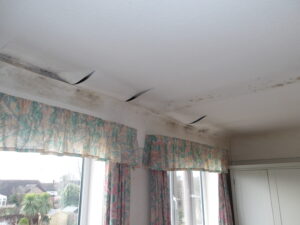
A lot of the time, mould gets blamed on rising damp or structural issues when the real cause is simply excess moisture and poor airflow. Its vital that education on this is passed onto the tenant with a mould report.
A mould assessment gives you the facts, not guesses. That means you can choose the right solution and avoid unnecessary disruption for your tenants. When the cause is identified correctly, landlords can take action that protects the property, keeps tenants safe, and reduces the chance of recurring issues.
If you’ve spotted mould in your home, it can feel worrying but it’s often caused by everyday moisture, not a major structural problem. Mould usually grows when warm, damp air gets trapped in rooms with poor ventilation, especially in bathrooms, kitchens, and bedrooms.
Before you spend money on sprays or quick fixes, it’s important to understand what’s actually causing it. Treating mould without tackling the root cause (like condensation or lack of airflow) means it will just return and that can be frustrating.
A proper mould assessment helps you know what’s really going on and what needs to be done. That way, you and your landlord can work together to fix the problem properly and keep your home healthier in the long term.